Squint Treatment in Jalandhar
Written and Reviewed by Dr. Nitish Narang, MBBS, MS (Ophthalmology), FICA Phaco & Cornea Surgeon
Most parents notice it in a photograph first. One eye on the camera, the other drifting slightly sideways. They assume it’s the angle. They wait. Then they see it again — in real life this time, when the child is tired or staring across the room.
That drift is a squint. Waiting to see if it sorts itself out is one of the more common mistakes families make.
At Narang Netralaya in Jalandhar, squint is among the most frequently treated eye conditions — in children and adults. Getting it assessed properly, before time works against the outcome, is what matters most.
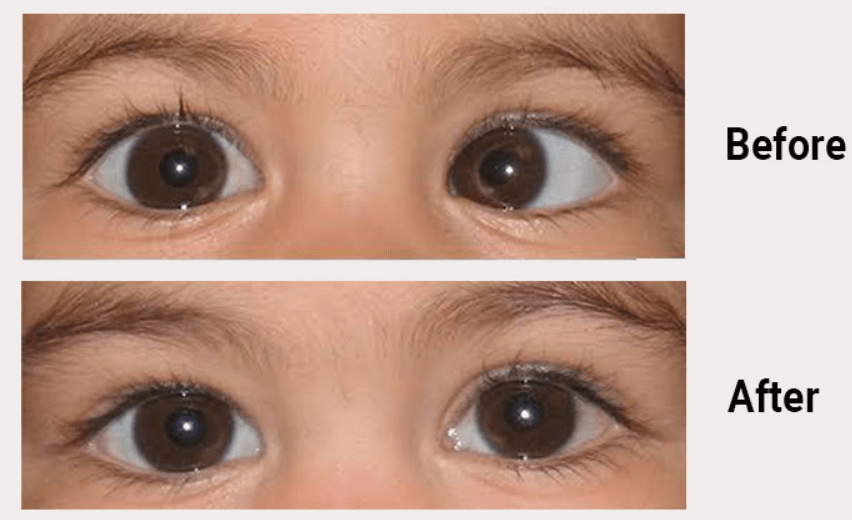
What Is Squint (Strabismus)?
Strabismus is the medical word. Most people just call it squint. One eye points where it should. The other drifts — inward, outward, sometimes upward or downward.
The appearance is what families notice first, and it does matter — self-consciousness sets in early. But that’s not what concerns the doctor. What concerns the doctor is what happens inside. Two eyes pointing different directions means two different images reaching the brain. The brain can’t handle both. It drops one. And the eye it drops starts falling behind. That ignored eye stops developing properly. That’s lazy eye — a separate problem that builds quietly on top of the squint.
The appearance is what families notice first, and it does matter — self-consciousness sets in early. But that’s not what concerns the doctor. What concerns the doctor is what happens inside. Two eyes pointing different directions means two different images reaching the brain. The brain can’t handle both. It drops one. And the eye it drops starts falling behind. That ignored eye stops developing properly. That’s lazy eye — a separate problem that builds quietly on top of the squint.
Some squints are obvious. Others appear only when the child is tired or unwell. Intermittent squints are easy to dismiss. They shouldn’t be.
Common Signs of Squint in Children and Adults
Misaligned eyes — one eye pointing differently from the other, even just occasionally. Parents usually spot it first in photos.
Double vision — adults with a new squint often report seeing two images. Children with a long-standing squint usually don’t, because the brain has already learned to block one out.
Head tilting or turning — positioning the head to find the angle where the eyes work best together. Looks like a habit. It’s compensation.
Eye strain and headaches — the eyes fighting each other causes fatigue. Headaches that arrive reliably after reading or screen time are worth investigating.
Difficulty focusing — trouble holding a clear image when switching between near and far. Things blur briefly, or never fully settle.
Closing one eye in bright light — a child doing this regularly may be cutting out the confusing second image from a misaligned eye.
What Causes Squint?
There’s rarely one clear answer. Usually it’s one of four things, sometimes a combination.
Long-sightedness is the most common cause in children. The eyes pull inward when the child works hard to focus. The right prescription sometimes fixes the squint entirely. Sometimes it just gets things started and other treatment is needed alongside.
Muscle imbalance is straightforward — one of the six muscles controlling the eye pulls harder than the others and the eye follows. No deeper mystery than that.
Nerve problems are different. When illness, injury, or a condition from birth disrupts the nerve signals reaching the eye muscles, a squint can develop or appear suddenly. Adults who develop a squint with no prior history usually get this investigated first.
Uncorrected vision in one eye can also lead to squint over time. The brain favours the stronger eye, the weaker one loses coordination, and it starts to drift. Squint also runs in families — worth knowing if a parent or older sibling had it.
Squint Treatment Options at Narang Netralaya
Glasses
For squints caused by refractive errors, prescription glasses are the starting point. In many children, especially those with accommodative esotropia (inward turning linked to long-sightedness), the correct glasses alone bring the eyes back into alignment. This is always tried before anything more involved.
For squints caused by refractive errors, prescription glasses are the starting point. In many children, especially those with accommodative esotropia (inward turning linked to long-sightedness), the correct glasses alone bring the eyes back into alignment. This is always tried before anything more involved.
Eye Exercises
Not every patient needs surgery or patching. For some, a set of eye exercises prescribed by the orthoptist is enough to improve how the brain uses both eyes together. Best suited to squints that aren’t constant. On their own they have limits — combined with other treatment, they add up.
Not every patient needs surgery or patching. For some, a set of eye exercises prescribed by the orthoptist is enough to improve how the brain uses both eyes together. Best suited to squints that aren’t constant. On their own they have limits — combined with other treatment, they add up.
Patching
When squint has caused the brain to stop using one eye properly, patching covers the good eye and forces the brain back to the weaker one. The eye itself is fine — it’s the brain that needs retraining. Patching does that.
When squint has caused the brain to stop using one eye properly, patching covers the good eye and forces the brain back to the weaker one. The eye itself is fine — it’s the brain that needs retraining. Patching does that.
Squint Surgery
Surgery repositions the eye muscles to correct alignment directly. Done under anaesthesia — general for children, local or general for adults. It doesn’t replace glasses or patching where those are needed. It works alongside them.
Surgery repositions the eye muscles to correct alignment directly. Done under anaesthesia — general for children, local or general for adults. It doesn’t replace glasses or patching where those are needed. It works alongside them.
When Is Squint Surgery Needed?
Surgery comes into the conversation when glasses and exercises haven’t moved things far enough, or when the type of squint was never going to respond to them in the first place. A large angle squint, one that’s there all day every day, or one that’s been causing double vision in an adult — these are the situations where muscle surgery is usually the right call.
It’s also used when appearance is the primary concern in an older child or adult where vision development is no longer the main issue — the eyes are functioning, but the misalignment affects confidence and daily life.
One thing worth knowing: surgery often improves alignment significantly but may not achieve perfect straightness in a single procedure. A small number of patients need a second operation. This is discussed honestly with families before any decision is made.
Why Early Treatment Is Important
The visual system in children is not fully developed at birth. It continues developing until roughly age seven to nine. During this window, the brain is still learning how to use the two eyes together — and it’s still possible to redirect that learning if something is going wrong.
A squint that goes untreated during these years causes the brain to permanently suppress the image from the turned eye. The eye that gets ignored doesn’t stay normal. Over time it loses vision — not from any structural damage, but from simple neglect by the brain. Getting that vision back is possible in young children with the right treatment. By the early teens, the brain has largely set its patterns and the opportunity closes.
Early treatment keeps that window open. Children seen before age five or six do consistently better.
Why Choose Narang Netralaya for Squint Treatment?
Squint is one of the conditions where being seen at the right place genuinely changes the outcome. A missed diagnosis, an incorrect prescription, or surgery performed without addressing the underlying amblyopia first — these are errors that create longer problems.
The surgical team has handled squint cases across all age groups and types — congenital squints in infants, accommodative squints in young children, and acquired squints in adults. Families are told what the realistic outcome looks like before any procedure, not after.
Book an Appointment
Frequently Asked Questions
Q1. What is squint eye treatment?
Depends on the cause and type. Glasses first if a refractive error is involved. Patching if amblyopia has developed. Exercises for certain intermittent squints. Surgery when alignment can’t be achieved any other way. Most patients need a combination.
Q2: Can squint be corrected without surgery?
Yes, in many cases. Children with squint linked to long-sightedness often respond well to glasses alone. Exercises help with certain types. Surgery comes in when other approaches haven’t achieved adequate alignment.
Q3:Is squint surgery safe?
Generally, yes. No surgery is completely without risk, and with squint correction the most common issue is under or over correction — the eye ends up slightly off target and needs another look. That aside, major complications don’t happen often.
Q4: At what age should squint be treated?
As early as possible. Glasses and patching can begin in infancy if needed. Surgery, where required, is often performed between ages one and four in young children with constant squints.
Q5: Can adults undergo squint treatment?
Yes. Surgery works well in adults — for squints carried since childhood and for those that develop later from nerve or muscle problems. Vision development isn’t the concern in adults, but alignment, double vision, and daily comfort are.
Q6: How long does recovery take after squint surgery?
Recovery is usually straightforward. Some redness, some soreness, a week or so of taking it easy. Children bounce back quickly in most cases. What’s important after surgery is showing up to the follow-up visits — the alignment needs monitoring and sometimes the prescription or patching plan changes once the eye has had time to settle.
Q6: Is squint treatment permanent?
For most patients, yes — when the cause is addressed and treatment completed properly. Some need a second procedure. Stability is better when amblyopia treatment runs alongside surgery.
Opening Hours
Monday
10 AM - 2 PM & 4 PM - 8 PM
Tuesday
10 AM - 2 PM & 4 PM - 8 PM
Wednesday
10 AM - 2 PM & 4 PM - 8 PM
Thursday
10 AM - 2 PM & 4 PM - 8 PM
Friday
10 AM - 2 PM & 4 PM - 8 PM
Saturday
10 AM - 2 PM & 4 PM - 8 PM
Sunday
CLOSED

We dedicated to providing flexible & accessible healthcare services.
Monday
10 AM - 2 PM & 4 PM - 8 PM
Tuesday
10 AM - 2 PM & 4 PM - 8 PM
Wednesday
10 AM - 2 PM & 4 PM - 8 PM
Thursday
10 AM - 2 PM & 4 PM - 8 PM
Friday
10 AM - 2 PM & 4 PM - 8 PM
Saturday
10 AM - 2 PM & 4 PM - 8 PM
Sunday
CLOSED
Narang Netralaya is one of Jalandhar’s most trusted eye care centres, offering advanced treatments with a patient-first approach.
- Visit Our Hospital 267, Mota Singh Nagar, Jalandhar, Punjab
- Contact Us +91 83600 84901
Vision
CATARACT
Retina
CORNEA
PEDIATRIC
GLAUCOMA
ICL
LASER
Vision
CATARACT
Retina
CORNEA
PEDIATRIC
GLAUCOMA
ICL
LASER