Eye Checkup in Jalandhar
Most people in Jalandhar visit an eye doctor twice in their life. Once when something goes wrong. Once when it gets bad enough that ignoring it is no longer an option.
That gap in between — sometimes ten years, sometimes twenty — is where most serious eye conditions quietly develop. Not dramatically. Slowly. Quietly. No pain, no obvious warning. Just gradual changes that feel like normal aging until one day the vision that is gone is simply gone.
That is what a proper eye checkup in Jalandhar at Narang Netralaya is actually for. Not just glasses. Not just a quick chart reading. Catching the things you cannot feel happening.
What Is a Comprehensive Eye Checkup in Jalandhar?
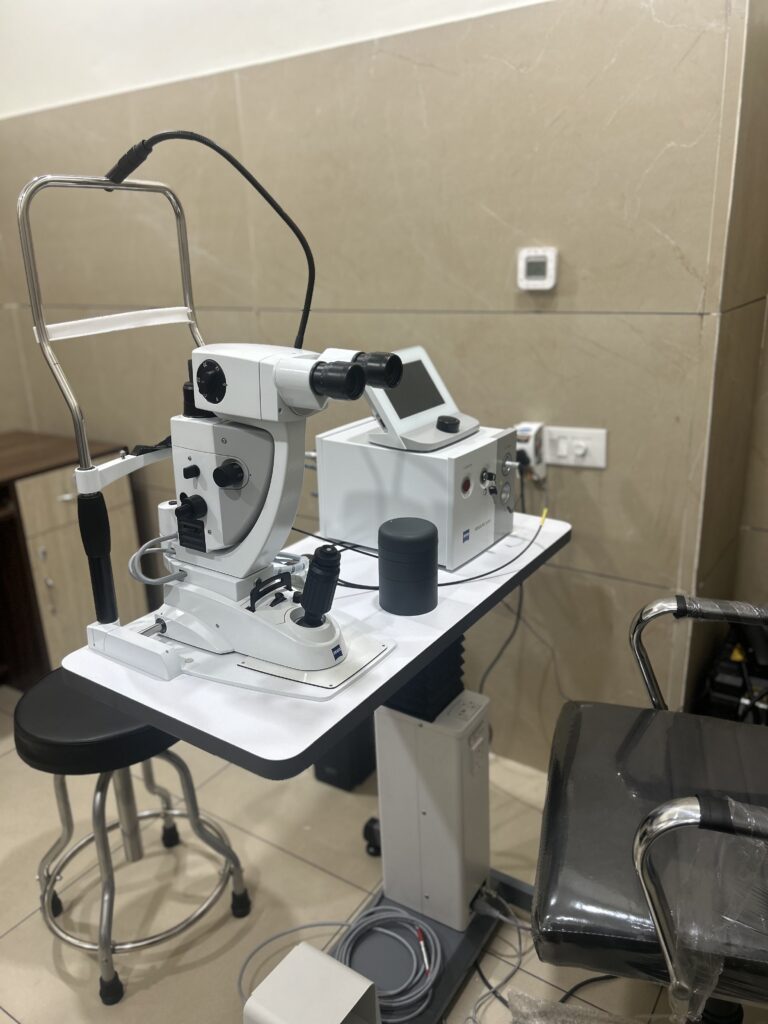
A comprehensive eye checkup in Jalandhar is not the two minute vision test most people remember from school.
When you come to Narang Netralaya, the examination covers visual acuity in both eyes separately, your exact glasses prescription, intraocular pressure to screen for glaucoma, a slit lamp examination of the cornea and lens, and a dilated examination of the retina and optic nerve at the back of the eye. Color vision testing is done where relevant.
The dilating drops take about 30 to 40 minutes to work. Plan for roughly an hour total. Bring someone to drive you home — near vision stays blurry for a few hours after dilation.
Who Needs a Regular Eye Checkup in Jalandhar?
Regular eye checkups in Jalandhar matter most for people who feel completely fine — because those are exactly the people whose problems go undetected longest.
Diabetic patients come first on that list.
Every single diabetic patient needs a dilated retinal examination once a year. Not when vision changes. Not when something feels off. Every year. Diabetic retinopathy gives no warning until damage is already done — annual screening at Narang Netralaya is the only reliable way to stay ahead of it.
Anyone above 40 belongs in this category too. Glaucoma, cataract, early macular changes — none of these announce themselves. They build quietly over years. A routine checkup every 12 months after 40 catches them at a stage where something can actually be done.
High myopia patients — above -6 diopters — need annual retinal checks regardless of symptoms. The stretched retina that comes with high myopia tears more easily. Finding a tear at a routine checkup means a ten minute laser procedure. Missing it means potential emergency surgery months later.
Family history of glaucoma, retinal detachment, or macular degeneration pushes the starting age for screening earlier. If a parent had glaucoma, annual pressure and optic nerve checks should start before 40.
Children from age 3. Earlier if anything looks unusual — an eye turning, constant rubbing, sitting too close to screens. School screenings catch the obvious ones. A proper dilated examination at Narang Netralaya catches what schools miss.
What Eye Conditions Get Caught at a Routine Checkup?
Eye checkup findings in Jalandhar at Narang Netralaya regularly pick up conditions patients had no idea were developing.
Cataract — the most common finding in patients above 50. Often present for years before vision changes enough to bother the patient. Early detection allows planning and timing the surgery at the right moment rather than waiting until the cataract is dense and surgery becomes more complex.
Glaucoma — the silent thief. Peripheral vision goes first. Central vision stays sharp for a long time. By the time a glaucoma patient notices something wrong, significant optic nerve damage has already happened. A routine pressure check and optic nerve assessment at Narang Netralaya catches this before that point.
Diabetic retinopathy — picked up on dilated retinal examination before any visual symptoms appear. Early laser or injection treatment at this stage prevents vision loss that becomes much harder to reverse later.
Retinal tears — small breaks in the peripheral retina that can lead to full retinal detachment if left untreated. Caught at a routine dilated examination — sealed with laser in a clinic procedure that takes minutes. Missed — potential surgical emergency weeks or months later.
Dry eye disease — extremely common in Jalandhar, where screen time is high and air conditioning is widespread. Patients often attribute watering, burning, and fluctuating vision to tiredness. A proper examination identifies dry eye and separates it from other conditions with similar symptoms.
Refractive errors — including changes in existing prescriptions. Many patients are walking around with outdated glasses prescriptions without realising how much better they could be seeing.
How Often Should You Get an Eye Checkup in Jalandhar?
Eye checkup frequency in Jalandhar depends on age, existing conditions, and risk factors — not a single answer fits everyone.
Children — every year from age 3, or immediately if any concern arises. School age children every 12 months through the growing years as prescriptions can change significantly.
Adults with no known eye conditions and no risk factors — every two years up to age 40, annually after that.
Diabetic patients — every year without exception regardless of how well controlled the diabetes is or how normal the vision feels.
Glaucoma patients or suspects — every 6 months or as advised after assessment.
Post-cataract surgery patients — as per the follow-up schedule given after surgery, then annually.
Patients with high myopia — annually for retinal assessment.
Anyone who noticed a change in vision — immediately, not at the next scheduled checkup.
What to Expect at Your Eye Checkup at Narang Netralaya Jalandhar
Eye checkup experience at Narang Netralaya starts with a detailed history — how long any symptoms have been present, any family history of eye disease, systemic conditions like diabetes or hypertension, current medications, and previous eye treatments or surgery.
Vision is then tested in each eye separately — distance and near. Refraction determines what glasses prescription, if any, would give the best possible corrected vision.
Intraocular pressure is measured — a quick painless test that screens for glaucoma. A puff of air or a small probe briefly touches the anaesthetised cornea. Takes seconds.
Slit lamp examination looks at the front structures of the eye in detail — cornea, lens, anterior chamber, eyelids. This is where cataracts, corneal conditions, dry eye changes, and anterior segment problems are identified.
Dilating drops are then instilled if a full posterior examination is needed. These take 30 to 45 minutes to work. The pupil widens, the retina and optic nerve become fully visible, and Dr. Nitish Narang or Dr. Madhushmita Narang examines the back of the eye thoroughly.
At the end of the examination, findings are explained clearly. What is normal. What needs monitoring. What needs treatment. What needs further investigation. No rushed consultations, no leaving with unanswered questions.
Eye Checkup Cost in Jalandhar at Narang Netralaya
Eye checkup pricing in Jalandhar varies depending on what the examination involves. A basic vision and refraction check sits at the lower end. A comprehensive examination including dilation, IOP measurement, slit lamp, and retinal assessment costs more — and covers significantly more ground.
For diabetic patients, the retinal examination is the most important component. For children, a cycloplegic refraction under dilating drops gives the most accurate prescription. For patients above 50, the full examination including optic nerve and retinal assessment is the relevant one.
At Narang Netralaya the examination cost is explained before it begins. No surprises at the billing desk afterward.
Why Narang Netralaya for Your Eye Checkup in Jalandhar
Eye checkup at Narang Netralaya means both the front and back of the eye are assessed by the right specialist. Dr. Nitish Narang handles anterior segment, cornea, cataract, and refractive assessments. Dr. Madhushmita Narang manages retinal and vitreoretinal evaluation — with fellowship training from LV Prasad Eye Institute, Hyderabad.
All diagnostic equipment is in-house. OCT scanning, fundus imaging, visual field testing, Pentacam corneal topography — no referrals to external labs for investigations that should be part of a proper eye checkup.
For diabetic patients, the retinal examination is the most important component. For children, a cycloplegic refraction under dilating drops gives the most accurate prescription. For patients above 50, the full examination including optic nerve and retinal assessment is the relevant one.
At Narang Netralaya the examination cost is explained before it begins. No surprises at the billing desk afterward.
Frequently Asked Questions
Q1. How much does an eye checkup cost in Jalandhar?
Cost at Narang Netralaya depends on the type of examination needed. Basic vision testing sits at the lower end. Comprehensive examination with dilation costs more and covers significantly more. Exact cost explained before the examination begins.
Q2: How long does an eye checkup take at Narang Netralaya?
Allow one hour. Vision testing and refraction take 15 to 20 minutes. Dilating drops need 30 to 45 minutes to work. The posterior examination itself takes 10 to 15 minutes after that.
Q3: Do I need an appointment for an eye checkup in Jalandhar?
Walk-ins are welcome at Narang Netralaya. Calling ahead on +91 83600 84901 reduces waiting time, particularly for comprehensive examinations requiring dilation.
Q4: Can I drive after a dilated eye checkup?
Not immediately. Near vision is blurred for 3 to 4 hours after dilating drops. Distance vision is usually adequate but comfort varies. Arrange transport or allow time before driving after a dilated examination.
Q5: How often should a diabetic patient get an eye checkup in Jalandhar?
Every year. Every single year. Regardless of how normal vision feels. Diabetic retinopathy causes no symptoms in early stages — the only way to catch it before damage occurs is annual retinal examination at Narang Netralaya Jalandhar.
Q6: What should I bring to my eye checkup at Narang Netralaya?
Current glasses or contact lenses. Any previous eye examination reports or prescriptions. A list of current medications — some affect eye pressure and retinal appearance. Information about any systemic conditions like diabetes or hypertension.
Q7: How do I book an eye checkup at Narang Netralaya Jalandhar?
Call or WhatsApp +91 83600 84901. Hospital at 267 Mota Singh Nagar, Jalandhar. Monday to Saturday, 10 AM to 8 PM.
Opening Hours
We dedicated to providing flexible & accessible healthcare services.
Narang Netralaya is one of Jalandhar’s most trusted eye care centres, offering advanced treatments with a patient-first approach.
- Visit Our Hospital 267, Mota Singh Nagar, Jalandhar, Punjab
- Contact Us +91 83600 84901