Retinal Detachment Surgery in Jalandhar
Stop for a second.
If you came to this page because something is happening to your vision right now — new floaters, a flash of light, a shadow that wasn’t there this morning — close this page and call Narang Netralaya at +91 83600 84901. Come in today. Not tomorrow.
If you’re here to understand what retinal detachment is, keep reading.
Your eye is basically a hollow ball. The inside back surface is lined with a thin layer called the retina. That layer is what actually does the seeing — it catches light, converts it into signals, sends those signals to your brain.
Now picture wallpaper peeling off a wall. When it’s stuck flat, it works perfectly. The moment it starts lifting — even a small corner — it stops getting the moisture and nutrients from the wall behind it. Leave it long enough and it dries out completely. Can’t be stuck back properly after that.
That’s retinal detachment. The retina lifts away from the back of the eye. The blood vessels feeding it stay behind. Without blood supply, those retinal cells start dying.
There is no pain. That’s the problem.
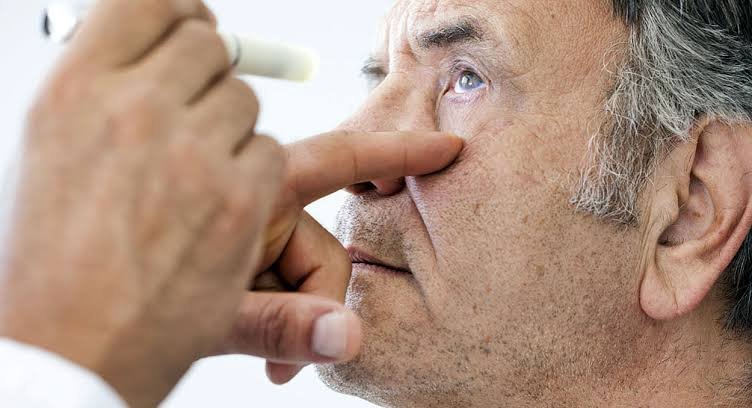
What It Feels Like
Four things. Remember these.
*Floaters that arrive suddenly.* Not the gentle ones you’ve had for years. A burst of new ones — specks, strings, cobwebs — appearing out of nowhere, often with a flash. That usually means a tear has happened and gel is leaking through it.
*Flashes of light.* Brief streaks at the edges of your vision, especially in dim light or when your eyes move quickly. The retina getting tugged.
*A curtain or shadow.* This one is the detachment itself. A dark area appears — usually from one side or from below — and slowly spreads. It doesn’t hurt. It just grows.
*Sudden central vision loss.* When the macula — the most important part of the retina — detaches, reading vision and face recognition disappear fast.
None of these hurt. That’s what makes people wait. Waiting is the most dangerous thing you can do.
Is This Actually an Emergency?
Yes. Not in a dramatic way. Just factually yes.
Here’s why timing matters so much. The macula is the center of the retina — it handles all your sharp, detailed vision. When it’s still attached, surgery gives genuinely good outcomes. Central vision has a real chance of recovering.
Once the macula detaches, retinal cells in that area start dying within hours. Surgery can put the retina back. It cannot bring dead cells back to life.
The difference between “vision mostly recovered” and “central vision permanently gone” is often just whether the patient came in before or after the macula went.
Same day. Call us. +91 83600 84901.
Why Does It Happen?
High myopia is the most common cause in younger patients. A very short-sighted eye is physically longer than normal — the retina gets stretched thinner across a larger surface. Thin retina tears more easily. Anyone above -6 diopters should get their retina checked regularly even if they feel fine.
A knock or blow to the eye can tear the retina immediately or weaken it enough that a detachment follows weeks later. Sporting injuries, accidents, even a serious fall.
Diabetes does specific damage to the retinal tissue and the gel inside the eye. Advanced diabetic eye disease can pull the retina away through scar tissue formation — a different type of detachment, but equally serious.
Cataract surgery carries a small but real increased risk of retinal detachment in the years after the procedure. Not a reason to avoid surgery — the benefits are far greater — but absolutely a reason to take retinal symptoms seriously after any eye operation.
Age is a factor too. After 50, the gel inside the eye naturally shrinks and separates from the retina. Usually harmless. Occasionally it tears the retina as it pulls away.
How We Check At Narang Netralaya
First comes a dilated retinal examination. Drops widen the pupil completely and the entire retina gets examined directly. Peripheral retina — where most tears start — can only be properly seen with full dilation. No scan replaces this step.
OCT scanning then gives a cross-section of the retinal layers. When the macula is involved, this tells us exactly how much has lifted, whether there’s fluid underneath, and what to expect surgically. It shapes the whole treatment plan.
Retinal imaging photographs the surface of the retina at high resolution. Documents where things stand right now. Every follow-up visit, new images get compared against this baseline — changes get caught.
Between these three, very little gets missed.
Surgery at Narang Netralaya
Dr. Madhushmita Narang performs vitreoretinal surgery here in Jalandhar. Patients from across Doaba no longer travel to Chandigarh or Hyderabad for this.
Vitrectomy is the main procedure. Three openings smaller than a millimeter are made in the white of the eye. The vitreous gel inside is carefully removed. The retinal tear gets sealed with laser. The retina is pressed back flat against the wall. Then the space gets filled with either a gas bubble or silicone oil to hold everything while healing happens.
Gas is used for most cases. It absorbs gradually over weeks as the retina heals. Patients maintain a specific head position during this time — uncomfortable, but important.
Silicone oil goes in when the situation is more complex. Large tears, significant scar tissue, cases where gas won’t provide enough support. It gets removed in a second procedure once the retina has fully settled.
Laser alone — without surgery — is sometimes enough for tears caught before a full detachment has formed. That’s the advantage of coming in early. A ten-minute laser procedure versus a full surgical operation. Same-day. Clinic setting. No admission.
Why Patients Come to Narang Netralaya
Dr. Madhushmita Narang did her retinal fellowship at LV Prasad Eye Institute in Hyderabad. Not a name to drop — LVPEI is where genuinely difficult retinal cases come from across South Asia. Fellowship training there means handling the complicated ones, not just the straightforward ones. She is a Gold Medalist and Punjab State Topper in MS Ophthalmology.
Everything diagnostic — OCT, dilated examination, retinal imaging — happens here. No sending patients across town for scans. In a retinal emergency, that matters a lot.
Same-day assessment for acute retinal symptoms. Call +91 83600 84901.
Follow-up after surgery is consistent and direct. Gas absorption, positioning, silicone oil removal decisions — all managed by Dr. Madhushmita Narang personally at Narang Netralaya, Jalandhar.
Frequently Asked Questions
Q1.What exactly is retinal detachment?
The retina peels away from the back wall of the eye and loses its blood supply. Cells start dying. It’s a surgical emergency.
Q2: Does it always need surgery?
Tears caught before full detachment sometimes need only laser. Full detachments need surgery. Either way — come in the same day symptoms appear.
Q3: Can it cause permanent blindness?
Yes. Untreated detachment destroys retinal cells that don’t regenerate. Even after successful surgery, how much vision returns depends almost entirely on how long the retina — especially the macula — was detached before the operation.
Q4: How successful is the surgery?
The retina reattaches anatomically in over 90% of cases with one procedure. Visual recovery is a separate question — it depends on the macula.
Q5: How long does recovery take?
Four to six weeks for the initial phase. Vision can continue improving for several months. Gas bubble patients maintain positioning for one to two weeks.
Q6: What are the first signs I should never ignore?
Sudden new floaters. Flashes of light. Any curtain or shadow across vision. In a diabetic patient — any sudden vision change at all.
Q7: When should I call a retina specialist?
The day symptoms appear. Not the next morning. That day. Narang Netralaya Eye Hospital Jalandhar — +91 83600 84901.
Opening Hours

We dedicated to providing flexible & accessible healthcare services.
Narang Netralaya is one of Jalandhar’s most trusted eye care centres, offering advanced treatments with a patient-first approach.
- Visit Our Hospital 267, Mota Singh Nagar, Jalandhar, Punjab
- Contact Us +91 83600 84901